Literacy
Literacy At Harris Academy Bermondsey
At Harris Academy Bermondsey, we are dedicated to literacy in all its facets: the joys of reading, the expressive precision of vocabulary and the power of the written word.
Research from the Organisation for Economic Co-operation and Development (OECD) found that reading for pleasure is more important for a child’s educational success than any other factor. Quite simply, those who read, succeed.
We also know that a rich vocabulary underpins success across the curriculum. Vocabulary influences every aspect of communication – listening, speaking, reading and writing – and is closely linked to academic achievement. The more words a student understands, the more confidently they can access new knowledge, express complex ideas and engage with the world around them.
As a result, literacy sits at the heart of life at HAB. Through our Personal Development curriculum, targeted reading interventions, ambitious vocabulary instruction, library provision and enrichment opportunities, we aim to create enthusiastic readers, articulate speakers and confident writers.

Literacy Through Personal Development
Literacy is a central tenet of our Personal Development curriculum. Each week, students read and discuss an article exploring a topic, person or event that helps them understand the world beyond the classroom.
These sessions expose students to a diverse range of perspectives and experiences, including Black British history, LGBTQ+ history, South Asian history, environmental issues, language and culture, and inspiring people from across society. Alongside developing reading and discussion skills, students build the cultural knowledge and vocabulary needed to thrive in modern Britain.
The Joys of Reading
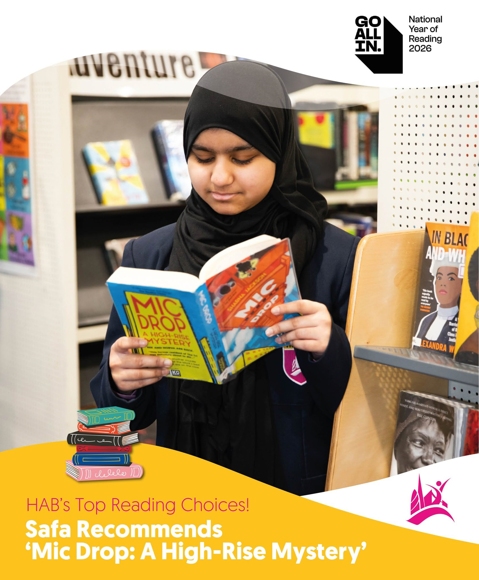
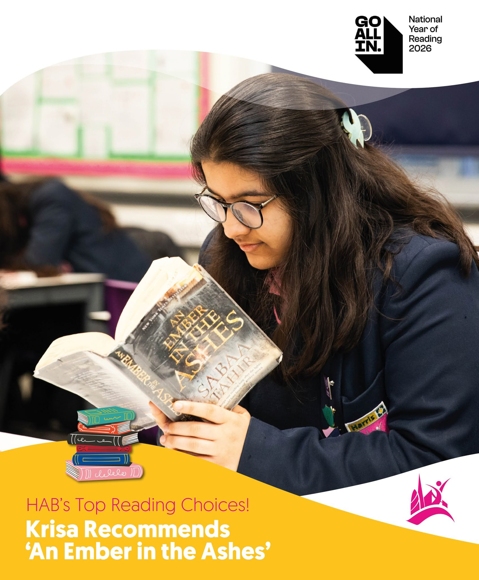
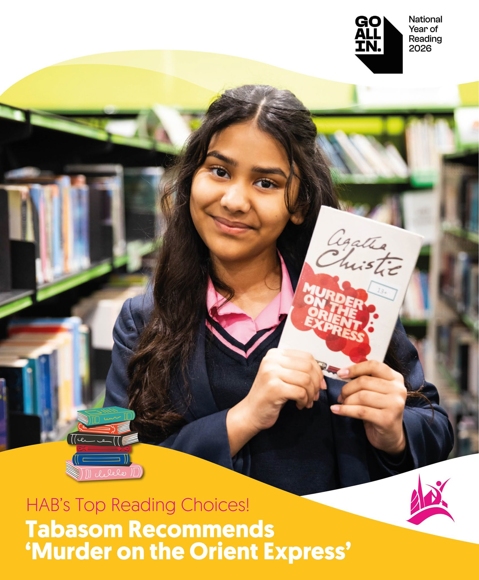
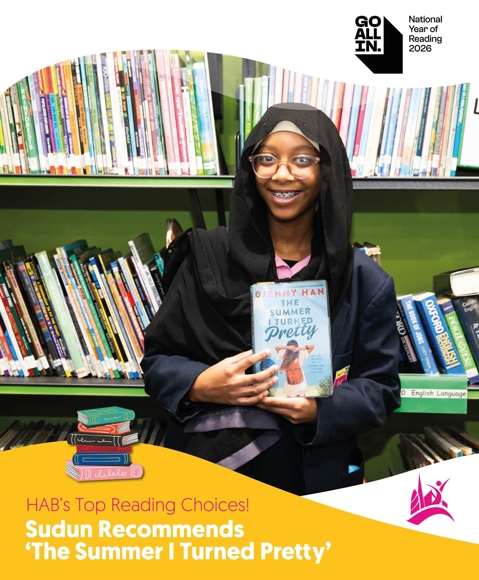
Reading for pleasure improves wellbeing, develops empathy and helps young people build meaningful connections with others. It also remains one of the most effective ways of improving reading attainment.
To ensure students always have access to engaging and exciting reading material, our Academy Library is open before school, during break and lunchtime, and after school.
Our inclusive library collection has been carefully curated to reflect the diverse interests, experiences and identities of our students. The Academy Librarian is always on the lookout for recommendations, helping the collection grow and evolve alongside the students who use it.
The library also hosts reading challenges, competitions and events throughout the year, creating opportunities for students to discover new books, try new genres and celebrate their reading.
To find out more about the Academy Library, please visit our Library page.
Reading at Home
As adults, both at home and at school, we are reading role models for the young people in our lives. Simply having books in the home and taking the time to read sends a powerful message that reading is valuable, enjoyable and worthwhile.
The Reading Agency reports that of children who report having fewer than 10 books in their homes, 46% say they do not like reading. For children who report having over 200 books at home, only 11% say they do not like reading and 66% consider themselves 'very confident' readers."
We encourage all families to support reading at home, whether through books, magazines, newspapers or online articles. Any regular reading, shared or independent, can make a significant difference to a young person's literacy development.
Reading Support and Intervention
We provide a range of reading interventions for students who require additional support, including phonics, SALT therapy, guided reading and Reader Leader.
These targeted programmes focus on developing key reading skills such as phonics, fluency, comprehension, inference and vocabulary.
Our phonics provision is built around the Fresh Start programme, a structured synthetic phonics programme designed to improve decoding, fluency, comprehension and vocabulary. Selected students attend intervention sessions three to four times each week in small groups or one-to-one, depending on their individual needs.
Reader Leader
Reader Leader is a peer mentoring programme in which trained Year 10 students support younger students with their reading. Reader Leaders receive training in phonics, fluency and comprehension strategies, enabling them to tailor support to the needs of each student they work with.
The programme helps younger students develop their confidence, reading fluency and comprehension whilst giving older students the opportunity to build valuable leadership and communication skills.
The impact can be remarkable. As Head of Literacy Amy Morris explains:
"There are students who have made two years' reading progress in a single year."
One of our Reader Leaders reflected:
"I joined the Reader Leader team because I wanted to help younger students and because I believe in the importance of spreading the love of reading. It's helped me develop my leadership skills and made me much better at explaining ideas and helping others."
Staff have noticed the benefits too. One tutor commented:
"After attending Reader Leader, one of my tutees is far more confident when reading aloud in lesson."
Reader Leader is a wonderful example of the HAB values of Ambition, Compassion and Respect in action.
The Expressive Precision of Vocabulary
A rich vocabulary is fundamental to success in school and beyond. Vocabulary supports reading, writing, speaking and listening, helping students access the curriculum and communicate their ideas with confidence.
At HAB, vocabulary instruction is carefully planned across every subject. We want students not only to understand ambitious vocabulary, but also to use it accurately and confidently in their speaking and writing.
Staff explicitly teach vocabulary through a range of evidence-informed approaches, including exploring word meanings, morphology, etymology and multiple meanings. This helps students develop a deep understanding of language and become confident communicators across all disciplines.
We use Beck, McKeown and Kucan's tiered approach to vocabulary:
Tier 1 Vocabulary: Everyday words that most learners acquire naturally through conversation and experience.
Tier 2 Vocabulary: High-utility academic vocabulary such as analyse, context, significant and emerge. These words appear across many subjects and are particularly important for academic success.
Tier 3 Vocabulary: Subject-specific terminology such as denominator, photosynthesis or homeostasis.
Research suggests that explicit teaching of Tier 2 vocabulary makes the greatest difference because these words are transferable across multiple subjects and contexts.
Bedrock Learning
To support Tier 2 vocabulary development, all students in Years 7, 8 and 9 have access to Bedrock Learning, an online platform designed to teach ambitious vocabulary through engaging non-fiction texts and activities.
Students complete 30 points of Bedrock each week as part of their English homework. In addition, literacy lessons within the Personal Development curriculum introduce students to ambitious vocabulary in a wide range of contexts.
Morphology
Students also learn about morphology: the study of how words are constructed from prefixes, roots and suffixes.
Many English words originate from Greek and Latin roots. Understanding these building blocks allows students to make informed predictions about the meaning of unfamiliar words. For example, knowing that the prefix col- means "together" helps students understand that collaboration means working together.
This knowledge creates a rich network of vocabulary understanding that supports independent learning throughout school and beyond.
Alongside explicit vocabulary instruction, students also have regular opportunities to apply and celebrate their literacy skills through a wide range of enrichment activities across the academy.
The HAB Literacy Calendar
Some people see literacy as something to be taught. Here at HAB, we believe literacy is also something to be experienced.
Throughout the year, students have opportunities to engage with reading, writing and language in exciting and memorable ways. Our annual literacy calendar includes:
- World Book Day celebrations, where students and staff dress as their favourite literary characters and every student receives a book to add to their home library.
- Creative writing workshops led by inspiring authors, including Catherine Johnson, author of Freedom.
- Year 7 library induction lessons that introduce students to the library and help them develop lifelong reading habits.
- Book sampling events, where students choose books based on their opening lines rather than their covers.
- The Literary Tea Party, celebrating students who have shown exceptional commitment to literacy through book-themed activities and treats.
- The National Literacy Trust's Young City Poets project, which combines cultural visits with professional poetry workshops.
- The National Literacy Trust's Power of Voice project, empowering young people to tell the stories that matter to them and write for authentic audiences.
- Reading challenges, competitions and enrichment events throughout the year.
At HAB, literacy is more than a skill. It is a gateway to knowledge, creativity, opportunity and self-expression. Through reading widely, speaking confidently, writing purposefully and developing a rich vocabulary, our students gain the tools they need to thrive both in school and beyond.
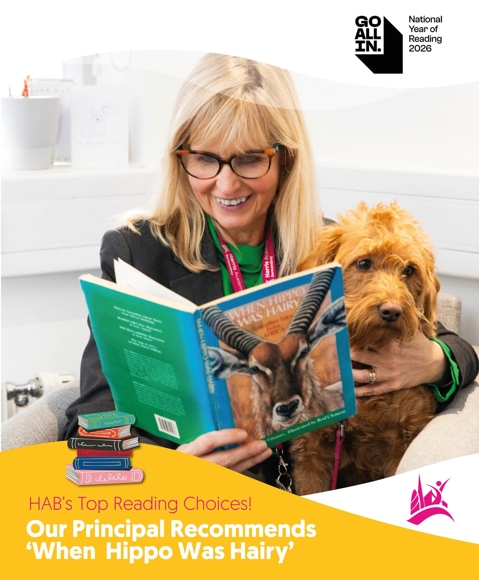
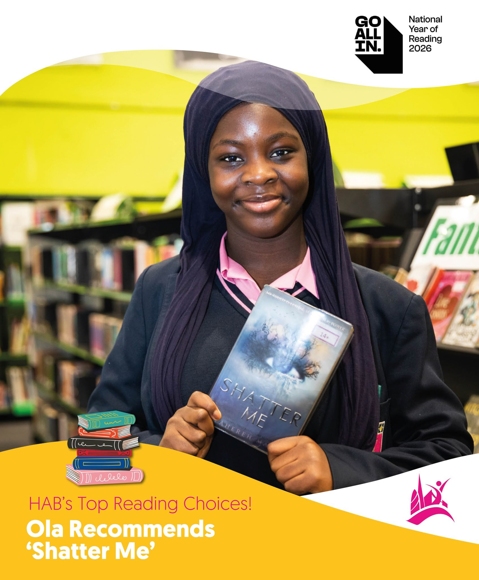
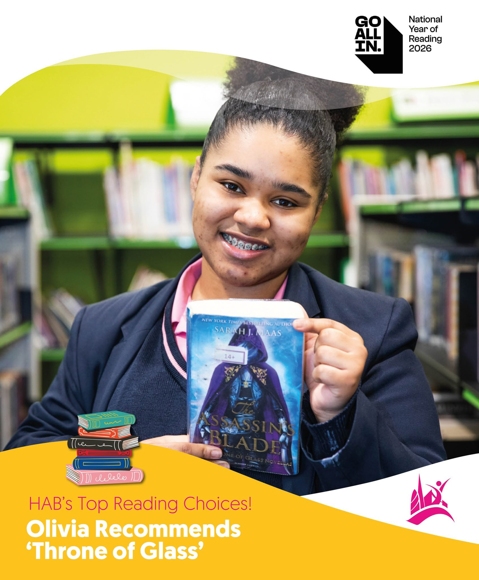
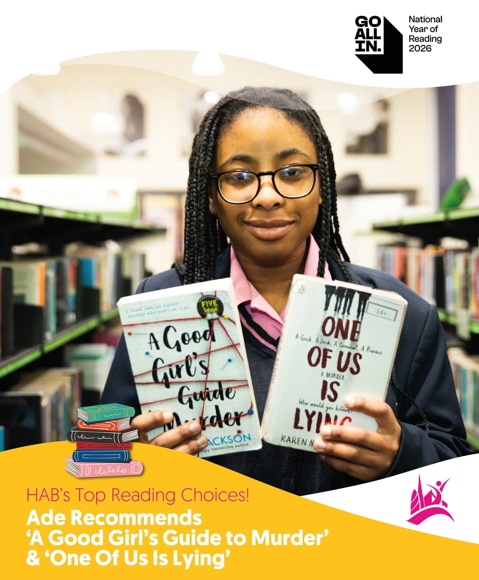
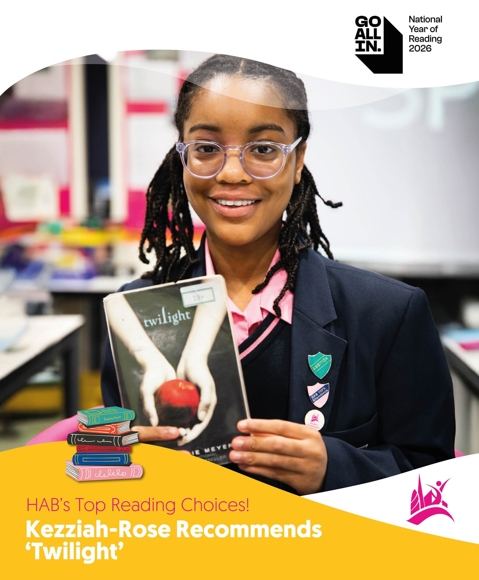
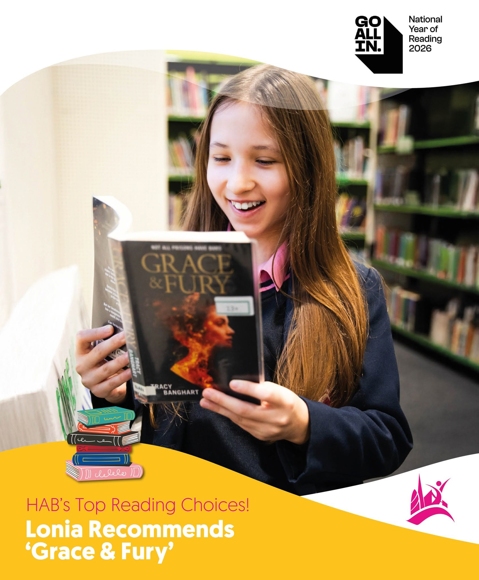
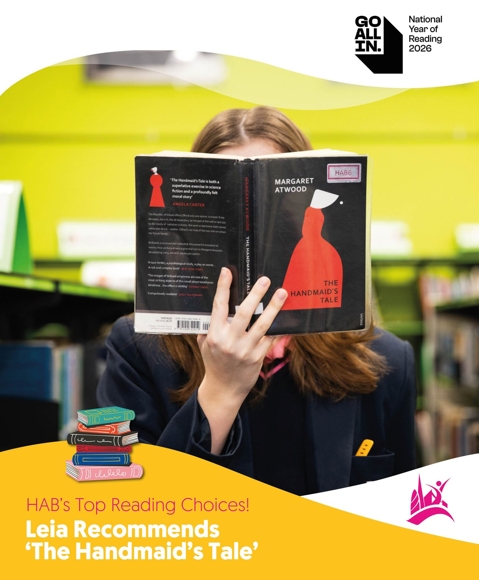
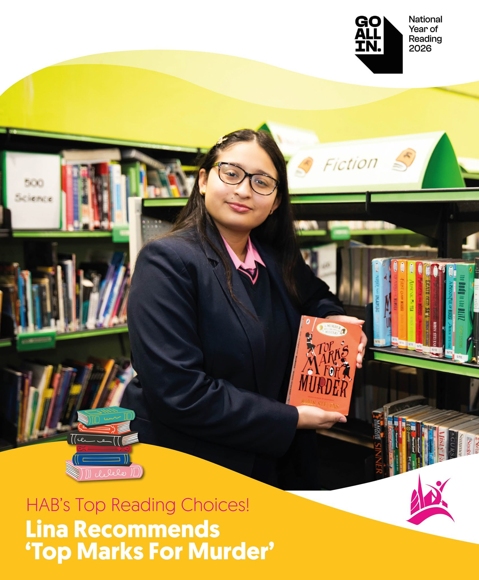
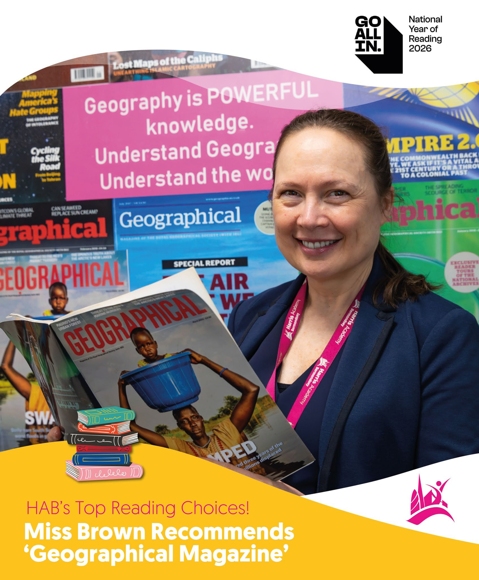
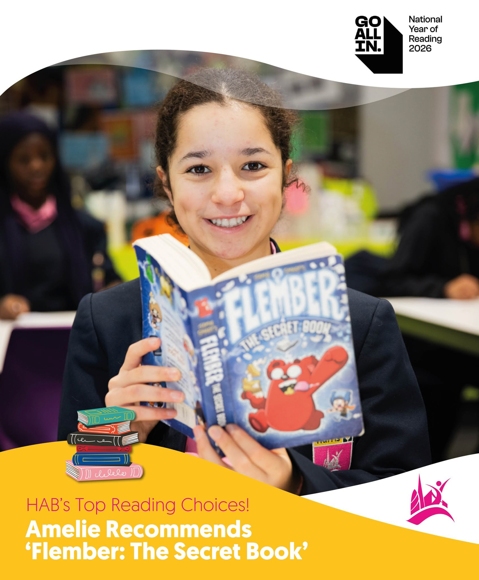
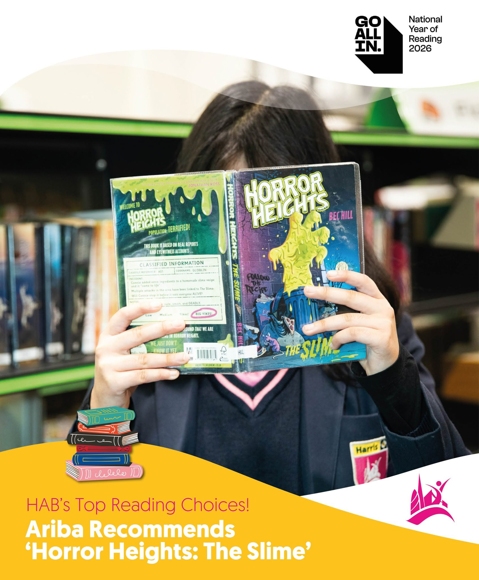
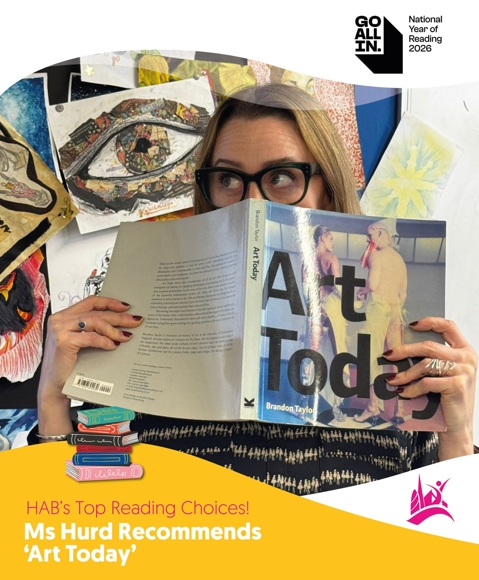
National Year of Reading Book Recommendations